


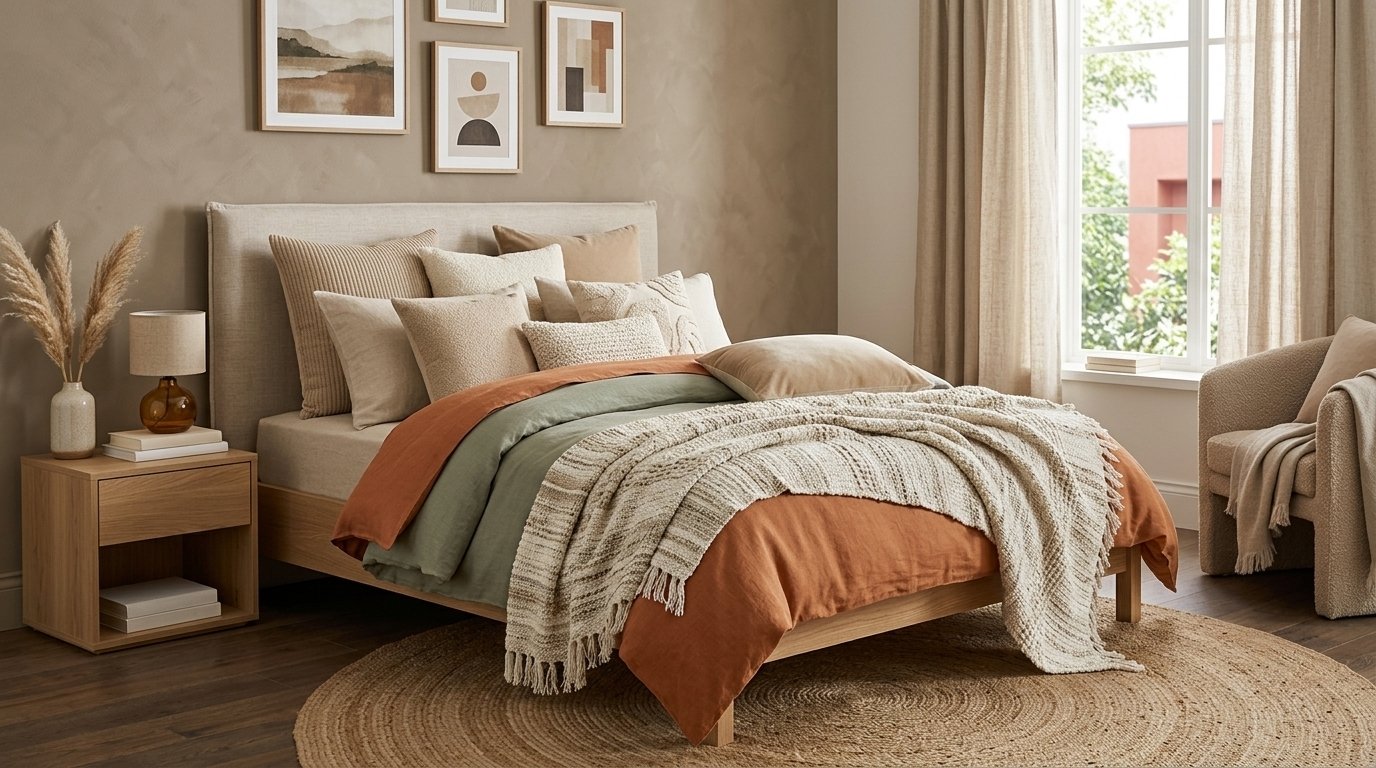
The Psychology of Bedroom Aesthetics
The modern bedroom has evolved from a functional sleeping space into a sanctuary dedicated to mental decompression, rest, and personal wellness. In contemporary interior architecture, home textiles play an essential role in defining the mood, acoustic comfort, and tactile quality of a room.
While wall paint, lighting fixtures, and furniture provide structural framework, textiles—bedding, throw blankets, window drapes, and accent cushions—bring warmth, texture, and visual harmony. At HM53 Distributions, our home textile collections are curated to blend modern design trends with functional comfort. This guide explores how to use textile design, layering techniques, and color theory to transform your master bedroom into a luxury retreat.
Color Psychology in Textile Selection
Colors evoke specific psychological and physiological responses. When designing a restorative bedroom environment, color selection directly influences how easily your mind unwinds at the end of the day.
+------------------+-----------------------+----------------------------------------+
| Color Family     | Psychological Effect  | Ideal Textile Application              |
+------------------+-----------------------+----------------------------------------+
| Earthy Neutrals  | Grounding, Calming    | Base Sheets, Duvet Covers, Area Rugs   |
| Sage & Olive Green| Restorative, Organic | Accent Throws, Quilted Pillow Shams    |
| Soft Warm Terracotta| Comforting, Cozy    | Knit Blankets, Decorative Cushions     |
| Crisp Slate & Gray| Modern, Clean, Cool | Tailored Sheets, Minimalist Coverlets  |
+------------------+-----------------------+----------------------------------------+
1. Earthy Neutrals and Biophilic Tones
Contemporary interior design has shifted away from stark, sterile whites in favor of rich, organic neutral palettes:
-
Warm Beige, Cream, and Oatmeal: These shades form a soothing foundation that reflects light softly without creating visual glare.
-
Sage Green and Eucalyptus: Drawing inspiration from nature (biophilic design), soft green tones reduce stress levels and lower resting heart rates.
-
Muted Terracotta and Clay: Add subtle warmth without overwhelming small spaces, pairing exceptionally well with natural wood accents.
2. Monochromatic Layering vs. High-Contrast Accents
Creating a luxury aesthetic relies on tonal balance. A monochromatic palette—utilizing varying shades, tones, and tints of a single hue (such as cream, warm taupe, and deep chocolate)—yields a serene, high-end hotel ambiance. If you prefer color contrast, keep base sheets neutral and introduce rich hues through textured throw blankets or accent pillow shams.
The Art of Layering Bedding Textiles
The hallmark of a high-end luxury bed is its multi-layered construction. Layering is not simply about piling on blankets; it is about combining different fabric weights, weaves, and visual textures to create a bed that looks inviting and adapts easily to changing temperatures.
                  Step-by-Step Bedding Architecture

      [ Layer 5: Accent Throw Blanket (Loose drape across foot) ]
      [ Layer 4: Decorative Pillow Shams & Lumbar Cushion     ]
      [ Layer 3: Folded Duvet / Comforter (Folded at 1/3 point)]
      [ Layer 2: Quilted Coverlet or Waffle Blanket           ]
      [ Layer 1: Base Fitted Sheet & Flat Sheet               ]
      +-------------------------------------------------------+
      |                   MATTRESS BASE                       |
      +-------------------------------------------------------+
Layer 1: The Foundation (Base Sheets)
Start with a high-quality fitted and flat sheet set in crisp percale or smooth sateen cotton. Tuck the flat sheet neatly at the foot of the bed using clean hospital corners for a sharp, tailored silhouette.
Layer 2: The Mid-Layer (Coverlet or Light Blanket)
Place a lightweight, textured coverlet—such as a waffle-weave cotton blanket or a subtle quilted matelassé—directly over the flat sheet. Fold the top of the coverlet down 8 to 10 inches along with the top sheet, exposing the smooth underside.
Layer 3: The Main Volume (Duvet Cover)
The duvet provides the primary visual mass and plush volume of the bed. Select a high-fill-power duvet insert encased in a soft linen or long-staple cotton duvet cover.
-
The Hotel Fold: Fold the duvet back in a clean tri-fold across the lower third of the bed. This showcases the textured coverlet underneath while giving the bed an inviting, dimensional look.
Layer 4: Pillow Styling and Proportion
Pillow arrangement should balance comfort with visual structure:
-
Background: Place two sleeping pillows enclosed in functional pillowcases flat against the headboard.
-
Midground: Add two decorative shams matching your duvet cover or coverlet, standing upright.
-
Foreground: Position a single elongated lumbar cushion (e.g., 12×36 inches) in a textured fabric (such as bouclé, wool blend, or slub linen) in the center to anchor the arrangement.
Layer 5: The Finishing Accent (Throw Blanket)
Drape an extra-soft throw blanket—featuring fringe, chunky knits, or ribbing—casually across the foot of the bed. This introduces asymmetrical organic texture and serves as a quick layer for afternoon naps.
Textile Textures: Combining Materials for Tactile Depth
Monotonous flat fabrics can make a bedroom feel cold and sterile. High-end interior styling relies on combining diverse surface textures to create visual richness.
+--------------------+-----------------------+---------------------------------------+
| Fabric Texture     | Visual & Tactile Feel | Pairing Recommendations               |
+--------------------+-----------------------+---------------------------------------+
| Smooth Sateen      | Lustrous, Silky, Flat  | Pair with Chunky Knits & Bouclé       |
| Waffle / Honeycomb | Geometric, Pliable    | Pair with Smooth Percale Sheets       |
| Slub Linen         | Organic, Textured     | Pair with Soft Velvet or Wool Throws  |
| Chunky Knit/Bouclé | Warm, Deep, Sculptural| Use for Accent Throws & Lumbar Pillows|
+--------------------+-----------------------+---------------------------------------+
Key Texture Pairings:
-
Smooth + Sculptural: Balance silky sateen base sheets with a deep honeycomb waffle blanket.
-
Crisp + Relaxed: Combine crisp percale sheets with a soft, naturally crinkled linen duvet cover for a casual, refined balance.
-
Matte + Sheen: Contrast matte linen fabrics with subtle sheen accents, such as a silk-blend lumbar pillow or polished wooden bedroom furniture.
Acoustic and Thermal Enhancements Through Textiles
In addition to visual appeal, home textiles significantly improve the physical environment of your bedroom:
-
Acoustic Dampening: Hard surfaces like hardwood floors, glass windows, and bare walls reflect sound, creating echoes that disrupt peaceful sleep. Plush area rugs, heavy lined drapes, and layered bedding absorb ambient noise, creating a quieter sleeping environment.
-
Draft and Light Control: Layering light-filtering sheer curtains beneath blackout drapes allows you to control natural light levels during the day while blocking unwanted streetlight pollution at night.
Checklist: Elevate Your Bedroom Aesthetics
Designing a luxury bedroom sanctuary is an accessible process when approached layer by layer.
-
[ ] Establish an earth-toned, organic color palette (creams, sages, warm taupes).
-
[ ] Invest in a high-volume duvet insert with a breathable cotton or linen cover.
-
[ ] Implement multi-layer bedding architecture (Sheets + Coverlet + Duvet + Accent Throw).
-
[ ] Mix at least three distinct textures (e.g., smooth sateen + waffle weave + chunky knit).
-
[ ] Style pillows using proportional scaling (Sleeping Pillows -> Shams -> Lumbar Cushion).
-
[ ] Integrate dampening textiles (heavy drapes, padded headboards, area rugs) to improve room acoustics.
Discover modern, high-grade bedding ensembles and textured accessories designed to transform your home at HM53 Distributions.