


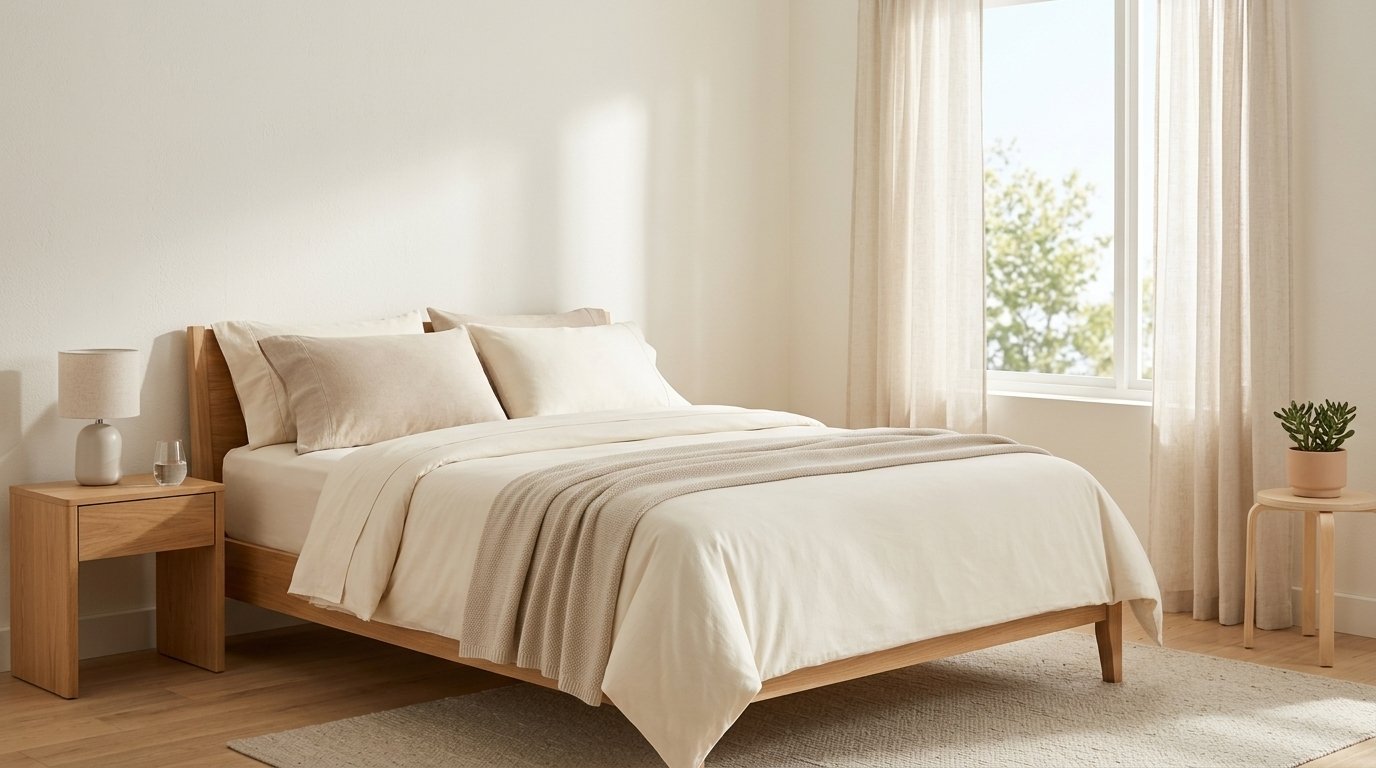
Why Your Choice of Bedsheets Matters
Sleep is the foundational pillar of physical health, cognitive performance, and emotional well-being. While many homeowners spend significant time researching mattresses, bed frames, and blackout curtains, one critical element often receives far less technical consideration than it deserves: the bedsheets. Your bedsheets are in direct, continuous contact with your skin for approximately one-third of your life.
At HM53 Distributions, we understand that selecting bedding is not merely an aesthetic decorative exercise; it is an investment in human health, thermoregulation, and restorative sleep. The market today is saturated with complex marketing terminology—ranging from thread counts exceeding 1,000 to specialized microfiber terminology. Understanding the science behind fabric fibers, weave structures, thread counts, and seasonal suitability is essential to making an informed decision that elevates your daily sleep experience.
Understanding the Raw Materials: Natural vs. Synthetic Fibers
The journey to choosing the ideal bedsheet begins at the microscopic level with the choice of fiber. Fibers determine how a sheet breathes, feels against the skin, holds dye, and endures repeated laundering cycles.
1. Long-Staple and Extra-Long Staple Cotton
Cotton remains the global benchmark for luxury bedding. However, not all cotton is created equal. The quality of cotton is primarily dictated by its staple length—the length of the individual cotton fibers harvested from the plant.
-
Short-Staple Cotton: Fibers under 1.125 inches. Common in budget bedding, short staples result in splices along the yarn, creating a rougher texture over time and predisposed to pilling.
-
Long-Staple Cotton (LSC): Fibers measuring between 1.125 and 1.25 inches. LSC produces smooth, strong, and supple yarns that yield soft, durable sheets.
-
Extra-Long Staple Cotton (ELSC): Fibers exceeding 1.375 inches, including Egyptian Cotton, Pima, and Supima. These fibers yield exceptionally fine yarns that can be tightly woven into silky, lightweight, yet ultra-durable textiles that soften progressively with every wash cycle.
2. Pure Linen
Derived from the flax plant, linen is one of the oldest textiles in human history. Linen fibers are naturally thick, highly durable, and inherently thermoregulating.
-
Breathability & Moisture Wicking: Linen can absorb up to 20% of its weight in moisture before feeling damp, making it an extraordinary material for hot sleepers and humid climates.
-
Aesthetic Appeal: Linen possesses a relaxed, textured drape with natural slubs. While initially crisp, linen undergoes a continuous softening process through laundering, developing an enviable vintage feel over time.
3. Bamboo Viscose and Tencel (Lyocell)
Wood-pulp derived cellulosic fibers have gained immense popularity due to their silky texture and moisture management properties.
-
Tencel (Lyocell): Produced from sustainably harvested eucalyptus wood via a closed-loop solvent process, Tencel is exceptionally smooth, cool to the touch, and naturally resistant to bacterial growth.
-
Bamboo Viscose: Known for its fluid drape and satin-like softness, bamboo textiles offer excellent moisture transport and temperature control.
4. Polyester Microfiber and Blends
Microfiber consists of finely woven synthetic petroleum-based fibers. While microfiber sheets are highly affordable, stain-resistant, and wrinkle-free, they lack the natural breathability of cotton or linen. Synthetic sheets tend to trap body heat and moisture, which can disrupt deep REM sleep cycles during warmer months.
Deconstructing the Thread Count Myth
For decades, consumer marketing pushed the narrative that a higher thread count automatically equates to higher luxury. In reality, thread count—the number of horizontal (weft) and vertical (warp) threads per square inch of fabric—is only one piece of the quality equation and is frequently manipulated.
+------------------+-----------------------+---------------------------------------+
| Thread Count     | Quality Assessment    | Characteristics                       |
+------------------+-----------------------+---------------------------------------+
| Under 200        | Lower Density         | Coarse, lightweight, short lifespan   |
| 200 to 400       | Optimal Balance       | Crisp, highly breathable, durable     |
| 400 to 600       | High Density/Luxury   | Silky, slightly heavier drape         |
| 800 to 1200+     | Often Manipulated     | Heavy, less breathable, synthetic ply |
+------------------+-----------------------+---------------------------------------+
How Manufacturers Inflate Thread Count
A square inch of single-ply fabric can realistically fit between 200 and 500 single threads. To claim thread counts of 800, 1,000, or 1,200, manufacturers often twist multiple weak, low-grade threads together into a multi-ply yarn. Counting a 2-ply yarn as two threads rather than one mathematically quadruples the stated count without improving fabric softness or longevity. In fact, multi-ply construction creates heavy, dense sheets that trap air and feel stiff.
Rule of Thumb: Prioritize single-ply long-staple cotton with a thread count between 250 and 450 for the ideal balance of airflow, weight, and durability.
Weave Structures: Percale vs. Sateen vs. Jersey
Even when using identical cotton yarns, the technique used to weave those yarns profoundly alters the final texture, warmth, and appearance of the sheet.
       Percale (1-over-1-under)                     Sateen (3-or-4-over-1-under)
   +---+---+---+---+---+---+                   +---+---+---+---+---+---+
   | X |   | X |   | X |   |                   | X | X | X | X |   | X |
   +---+---+---+---+---+---+                   +---+---+---+---+---+---+
   |   | X |   | X |   | X |                   |   | X | X | X | X |   |
   +---+---+---+---+---+---+                   +---+---+---+---+---+---+
1. Percale Weave
Percale uses a classic grid structure: one thread over, one thread under.
-
Texture: Crisp, matte finish reminiscent of high-end hotel bedsheets.
-
Performance: Highly breathable, cool to the touch, and ideal for hot sleepers or summer seasons.
-
Maintenance: Prone to natural wrinkling, which reflects its pure, unadulterated cotton structure.
2. Sateen Weave
Sateen uses a satin weave pattern: three or four threads over, one thread under. This exposes more yarn surface on the top of the fabric.
-
Texture: Exceptionally soft, silky, with a lustrous sheen and a heavier, cozy drape.
-
Performance: Traps slightly more body heat than percale, making it ideal for cooler climates or year-round comfort in air-conditioned environments.
-
Maintenance: Resists wrinkles naturally due to its weave structure but requires gentle washing to prevent snagging.
3. Jersey Knit
Jersey is not a woven fabric; it is knitted in a continuous loop, identical to a soft cotton t-shirt.
-
Texture: Stretchy, casual, supple, and warm.
-
Performance: Excellent for winter months or children’s rooms, though it can stretch out over time compared to structured woven fabrics.
Sizing, Depth, and Fit Engineering
A common point of frustration for homeowners is purchasing a sheet set only to find the fitted sheet constantly slipping off mattress corners. Modern mattresses frequently incorporate memory foam toppers or pillow-top layers, increasing overall mattress height significantly.
   Standard Mattress Depth:   8" to 12"  --> Standard Fitted Sheet
   Deep Mattress Depth:       13" to 17" --> Deep Pocket Sheet
   Extra-Deep Mattress Depth: 18" to 22" --> Extra-Deep Pocket Sheet
When evaluating bedding at HM53 Distributions, always measure your mattress height (including any toppers) prior to selecting pocket depth:
-
Elastic Engineering: Ensure the fitted sheet features 360-degree heavy-duty elastic around the entire perimeter, rather than elastic confined strictly to the four corners.
-
Dimensions: Factor in natural fabric shrinkage (typically 3% to 5% for pure natural cotton) during the initial wash cycles. High-grade bedding is pre-cut slightly larger to accommodate this physiological adjustment.
Seasonal Bedding Strategies
Adapting your bedding strategy seasonally optimizes thermal regulation and improves sleep continuity throughout the changing months.
-
Spring & Summer Configuration:
-
Base Sheet: Percale Cotton or Pure Linen (200–300 Thread Count).
-
Duvet / Cover: Lightweight Tencel or unpadded linen duvet.
-
Objective: Maximize vapor movement and thermal dissipation away from the body.
-
-
Fall & Winter Configuration:
-
Base Sheet: Long-Staple Sateen Cotton or Cotton Flannel.
-
Duvet / Cover: Medium-to-heavy down or down-alternative duvet with a dense sateen cover.
-
Objective: Retain radiant body heat while maintaining air circulation to prevent night sweats.
-
Conclusion and Final Checklist
Selecting the ideal bedsheet set is a blend of understanding materials science and identifying personal tactile preferences. By focusing on fiber staple length, single-ply weaves, genuine thread counts, and correct pocket depth, you can cultivate a truly restorative sleeping environment.
Quick Buyer’s Checklist:
-
[ ] Choose 100% Long-Staple Cotton, Linen, or Tencel for natural breathability.
-
[ ] Target a Thread Count between 250 and 400 for cotton woven sheets.
-
[ ] Select Percale for a cool, crisp feel or Sateen for a warm, silky drape.
-
[ ] Verify Mattress Depth to match pocket sizing.
-
[ ] Check for 360-degree elastic on fitted sheets.
Explore the curated, premium home textile collections available at HM53 Distributions to find your perfect bedding solution today.